

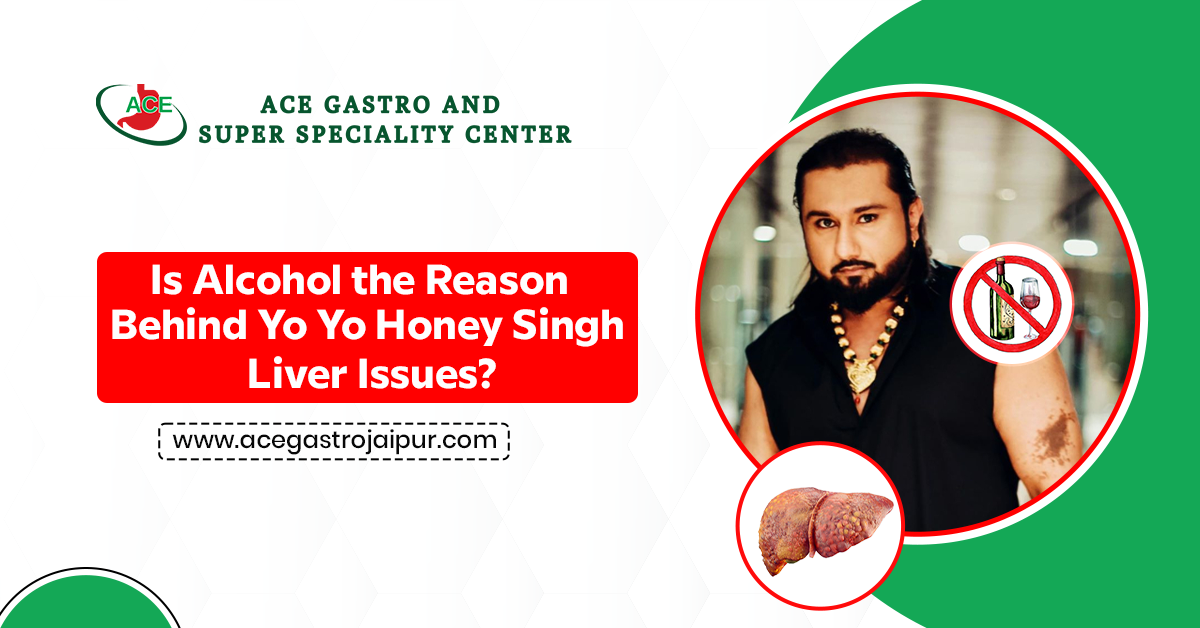
Is Alcohol the Reason Behind Yo Yo Honey Singh liver issues?
- Admin
- Apr 27, 2026
Introduction
Yo Yo Honey Singh is one of the most famous music producers and rappers in India and the ruler of the music industry with hits in the charts, Desi Kalakaar, lungi dance, and Chaar botal vodka. Notwithstanding, behind all the glitz and glamour of his success, the artist faced a silent battle that, in the long term, made him exit the limelight. Yes, you did hear this right. It did not happen overnight that he disappeared.
The association between alcohol intake and severe long-term health issues, such as Honey Singh Liver Issues, has gained even more significance to raise awareness on the risks of drug abuse, especially when coupled with mental illness.
Here we will assist you in learning more about the same in detail!
The Dark Period: What Went Wrong with Honey Singh?
Yo Yo Honey Singh suddenly took the exit from the music industry in 2014, at the peak of his career success. Years passed, and fans and media were speculating that he would not be there. Even then, it was not until long after this that it became known that the withdrawal was a painful truth on the part of Singh himself.
He highlighted a two-year painful experience of living with bipolar disorder and some paranoid symptoms during which he had developed into a popular media figure with concert and TV show appearances, overworking, insomnia, spending long periods away from his family, at which point he began to drink in large amounts.
Learning Honey Singh Liver Problems: The Drinking Game
Although Honey Singh has not officially disclosed the specifics of his diagnosis of liver disease, his confirmed excessive alcohol drinking in his hard times raises some important questions as to how alcohol kills the liver. This is especially so in light of his own struggle and the health awareness of the masses that was required concerning this matter.
What happens is that the alcohol harms the liver in the following ways:
Once an individual has regularly been consuming a lot of alcohol, the liver is forced to work extra hours to digest and metabolize the substance. This undying stress may result in transformative liver damage. The alcohol related liver disease may be divided into 3 major stages:
Fatty Liver (Hepatic Steatosis):
This is one of the primary stages. In this stage, there is a deposition of fat in the liver cells, and this can be reversible provided alcohol intake is terminated.
Alcoholic Hepatitis:
This is the second stage, and this time there is inflammation of the liver, which is painful and can be long-lasting even when a person stops drinking.
Cirrhosis:
This is the last stage. Here, there is a lot of damage to liver tissue that is mostly irreversible and may result in liver failure.
Honey Singh Liver Problems highlights the importance of understanding that alcohol abuse is not only dangerous to your mental health, but also has severe physical effects, which may only be reversed in years.
The Mental Health and Addiction Connection
As a part of his rehabilitation, he learned improved coping skills and eventually stopped drinking alcohol, with assistive help again by his family and friends, primarily his wife Shalini Singh, who was vital in helping him to overcome the period of recovery.
This is highly significant to take into consideration: In the presence of alcohol incidence with Bipolar disorder, this may augment hopelessness as well as despair that predisposes the probability of suicide ideation or even acts. Alcohol is a self-medication that most individuals with mental problems, like bipolar disorder, are unaware of, such as how to deal with mood swings and emotional pain. This, however, is a vicious cycle where alcohol is ruining both the mental health as well as physically, as in the case of Honey Singh and his liver complications.
Honey Singh’s Recovery Journey
In his documentary, Honey Singh describes his current life, where he has stopped drinking, has become physically active, and is taking up performances and shows at a slower pace than in the past. The way of his recuperation proves that it is possible to change with the help of will, appropriate medical care, family, and time.
There were several strategies for the recovery process:
- Professional Medical Treatment
- Rehabilitation
- Family Support
- Lifestyle Changes
Why You Should Consult a Liver Specialist in Jaipur
You may be concerned about your liver being healthy due to alcohol consumption or not, but it is important to involve a specialist medical practitioner. If you are searching for a Liver Specialist in Jaipur, Dr. Sushil Kumar Jain can perform a thorough diagnosis, evaluate liver function, and prescribe appropriate treatment. Serious complications can often be avoided through early detection and timely intervention.
Conclusion
The experience of Honey Singh’s liver issues and the addiction of Yo Yo Honey Singh remind superstars and regular people that health problems can happen to everyone, whether they are a well-known musician or not. His bold move to speak publicly about his experience with bipolar disease and similar addiction to alcohol has contributed to the destigmatization of mental health in India. Scientific evidence shows that the interrelationship between alcohol drinking and severe liver harm is indisputable. If you are facing similar digestive or liver-related concerns, consulting a Gastro Doctor in Jaipur can help with timely diagnosis and proper treatment.
The greatest lesson of Singh’s experience is that one needs to recover, and the sooner the better. This has to be done with the help of a professional and unquestionably with the support of the family.
FAQ
Will too much consumption of alcohol bring about liver disease, such as Honey Singh Liver Issues?
Yes: chronic alcoholism is among the causes of hepatitis, fatty liver, and cirrhosis, which may result from liver disease.
Do Honey Singh’s liver issues have an exclusive cause as alcohol?
Alcohol is one of the primary risk factors, although viral hepatitis, genetics and others can also lead to liver disease. It requires professional diagnosis.
Is reversing liver damage due to alcohol possible?
Fatty liver at its initial stages is only reversible through complete abstinence. Nevertheless, more severe forms lead to scarring that cannot be completely undone (advanced cirrhosis).
What are the effects of bipolar disorder on alcohol abuse?
Consumers of alcohol tend to self-treat mood swings, which can result in addiction and aggravation of both conditions, bipolar disorder and alcoholism.
What do the red flags of alcohol-related liver issues look like?
Some signs, such as yellows of the skin/eyes, stomach blood, fatigue, nausea, dark urine, and lack of appetite, are symptoms that may endanger your health unless a doctor is involved.


